

It is 4.40pm on a Thursday. Priya has two things open on her desk. A referral form, and a file she has read so many times she could recite it.
She is referring the same child she referred in September.
The first referral was not ignored. It was accepted, logged, acknowledged. Something happened somewhere. And the child is back in the same room, in the same state, at the same point in the day. The only thing that has changed is the date at the top of the form.
This is the part that does not get said in a trust meeting.
And if you are the person filling in that form for the second time, there is something worth saying before anything else.
The fact that you noticed is not nothing. Plenty of children never get a second referral, because nobody was holding the thread for them. You were. Whatever else this piece says, it does not say that you missed something.
What a referral actually is, in numbers
It is worth starting with the national picture, because it changes what a returning referral means.
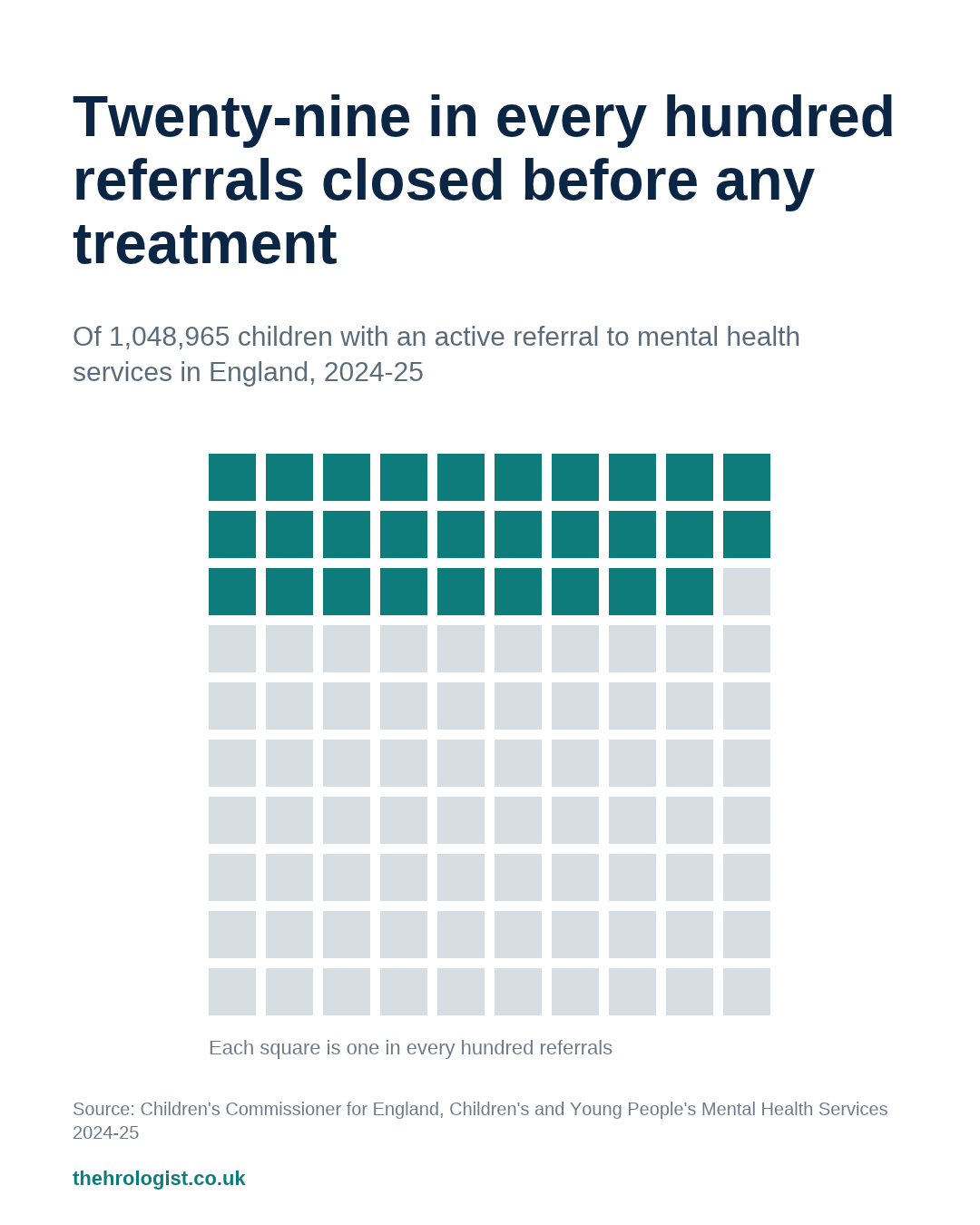
In 2024-25, 1,048,965 children in England had an active referral to children's mental health services. That is roughly one child in ten, and 9.5% more than the year before. Twenty-nine per cent of them had their referral closed before they received any treatment.
The waits are the part worth sitting with. Children who did receive treatment waited a median of 35 days. Children who did not receive treatment waited a median of 224 days to find that out.
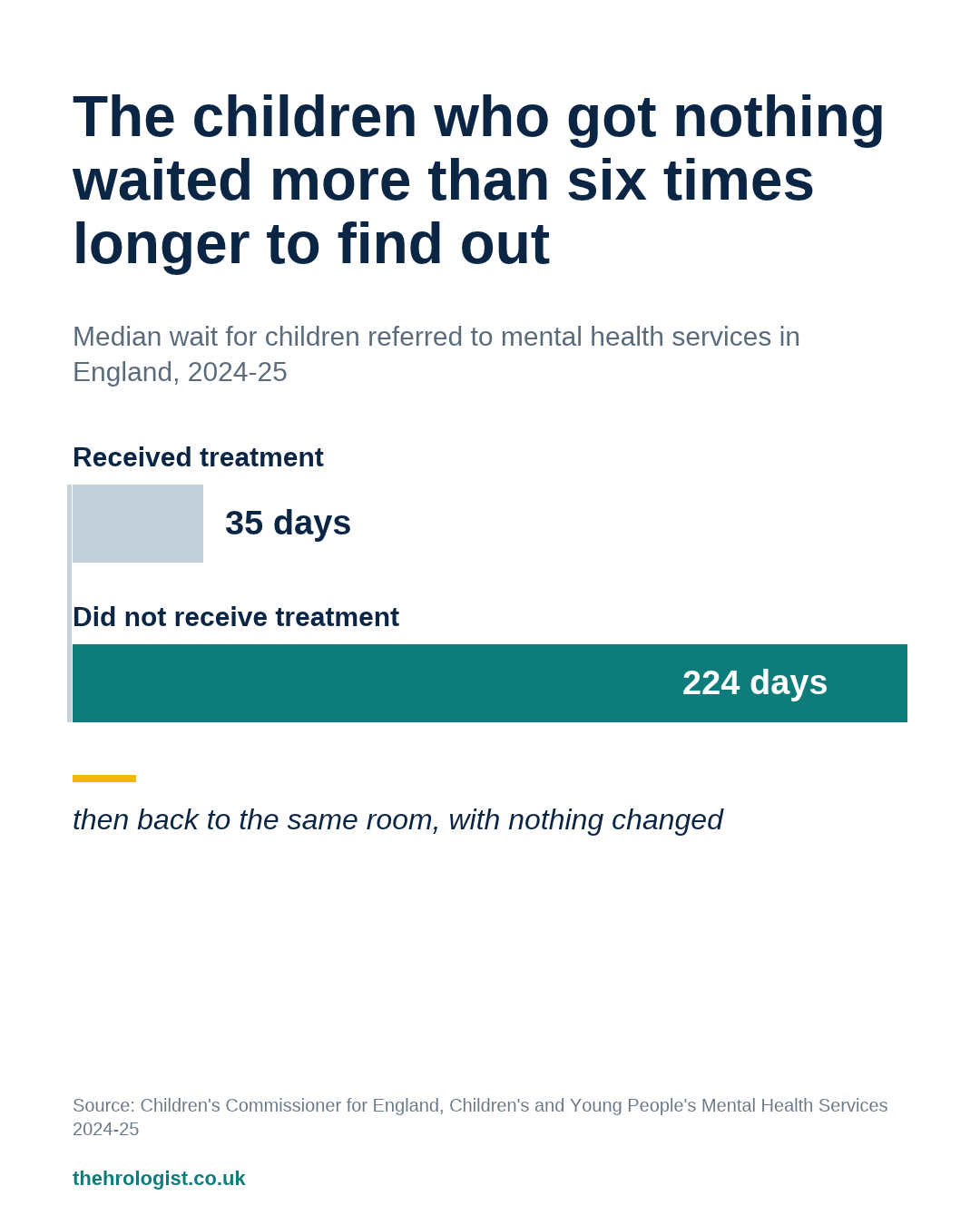
So the honest description is not "the waiting list is long". It is that a referral is a slow and uncertain route which, for close to three children in ten, ends in nothing after the better part of eight months.
If the referral is for suspected autism, the odds shift again. 96,393 children were referred for suspected autism in 2024-25, a rise of 47% in a single year. Thirteen per cent had received treatment by the end of March 2025. Seventy-one per cent were still waiting.
None of that is an argument against referring. It is an argument against treating the referral as the intervention.
It is not the waiting list
The waiting list is real. It is also the easiest thing to blame, which is why it absorbs every conversation about why nothing changed.
A referral that comes back is telling you something more specific than "the system is overloaded".
It is telling you that the child moved and the conditions did not.
What a returning referral is signalling
Three things, usually. Sometimes all three.
The referral treated the child as the unit of change. The child went somewhere, was seen, came back. The room they came back to was the same room. The transitions were the same transitions. The adult who met them at 8.40 was carrying the same load with the same information.
The pattern was never named, only the incident. Incidents get recorded because there is a form for them. Patterns do not have a form. So the pattern lives in the heads of three or four adults who have never been in the same room long enough to compare notes, and the referral goes out describing one incident.
The adults around the child had no shared read. Ask four adults what sets this child off and you will often get four answers. All four may be correct about their own twenty minutes of the day. None of them has the whole shape. The referral carries one of the four.
The evidence points the same way from the other direction. Among the targeted approaches the Education Endowment Foundation finds evidence for in its behaviour guidance are functional behaviour assessment interventions, which work through adults deciding together what a behaviour is doing for a child. The active ingredient is the shared read. The same guidance is direct that universal systems are unlikely to meet the needs of all pupils, and that knowing and understanding individual pupils is one of the six things that holds up to scrutiny.
It is rarely a people problem. It is a system signal.
This is national policy now, not a hunch
The National Audit Office examined support for children with SEN in October 2024. It found no consistent improvement in outcomes since 2019, despite high needs funding rising in real terms to £10.7 billion. It found that schools have limited incentives to be inclusive. And it asked the Department for Education to build an evidence base on how mainstream schools can best support these pupils.
Since then, the government has begun answering. The Schools White Paper, Every Child Achieving and Thriving, was published on 23 February 2026, alongside a consultation, SEND reform: putting children and young people first, which closed on 18 May 2026. The proposals point in one direction: support delivered in mainstream settings, earlier, without waiting for a diagnosis or a statutory process.
Two parts of it matter for everything described here.
The first is Individual Support Plans. The consultation proposes a statutory duty on settings to record and monitor a child's needs, and the provision made for them, in a digital plan reviewed each year with parents. Put plainly: the shared read would stop being good practice and become something you are expected to produce and keep current.
The second is transitions. The consultation says those plans should carry key information smoothly into a child's next setting, and that children with an EHC plan would have their needs assessed at transition points. The handover is being named as the thing that fails.
Be precise about the status of all this, because much of the writing on it is not. None of it is law. The consultation closed in May, the government had not published its response as of early October 2026, and the reform documents indicate new legislation is not expected to come into effect until September 2029, with no changes to support delivered through existing EHC plans before at least September 2030. Current duties and current plans continue in the meantime.
The part that lands in eight weeks
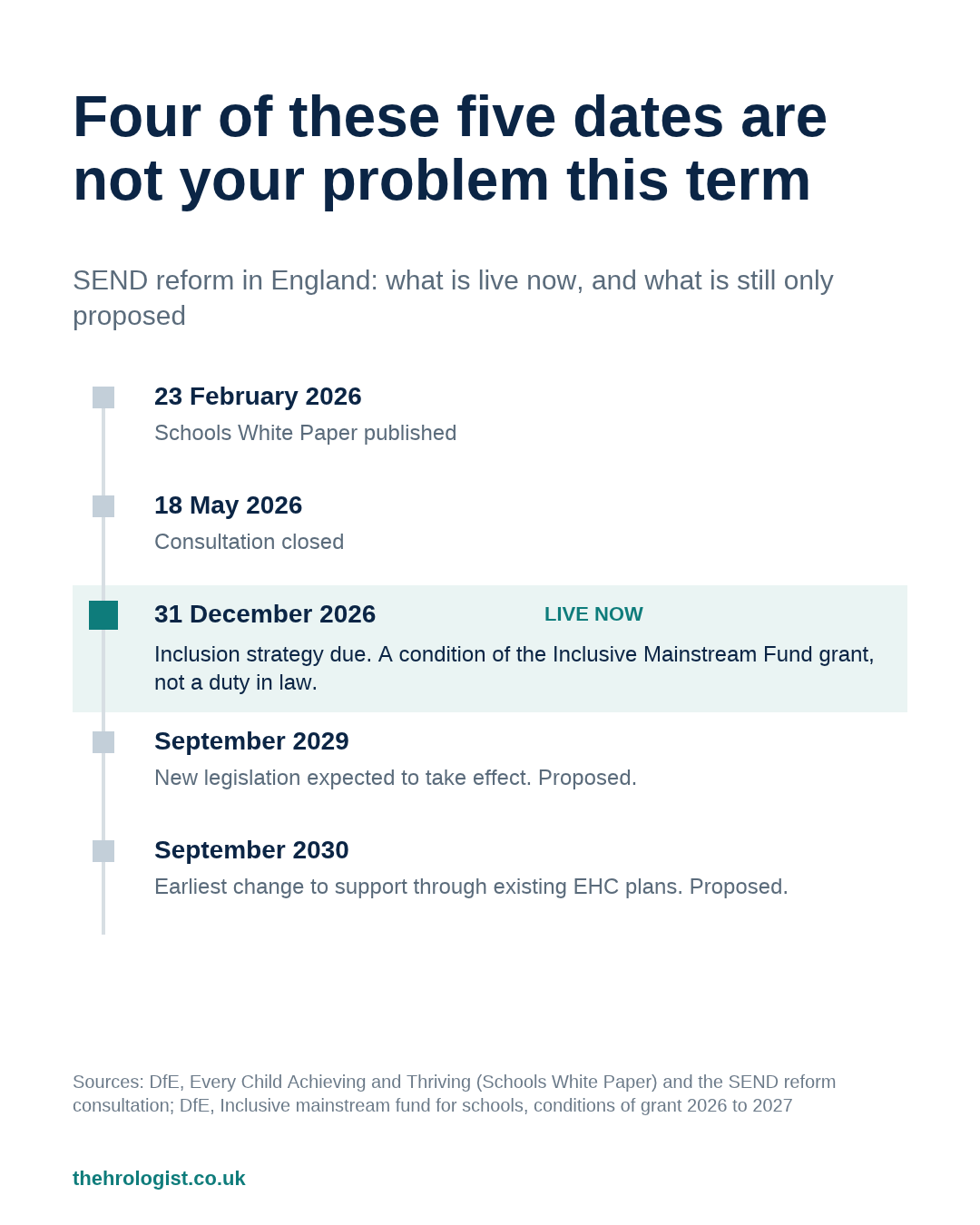
The reform itself is years out. One piece of it is already live, and it is the reason this is worth your attention in November rather than in 2029.
Schools receiving the Inclusive Mainstream Fund, worth around £400 million a year across three years, are required to publish an inclusion strategy on their website by 31 December 2026, and to update it annually. It has to set out the commonly occurring and predictable needs in your cohort, what you are doing about them, what you expect that to achieve and what it costs. The DfE has said it will review a sample of them.
One precision worth holding, because plenty of sector writing is getting this wrong: this is a condition of the grant, not a duty in law, and the guidance itself is non-statutory. That distinction matters a great deal if you are the person being told you must do something.
But read what it actually asks for. "Commonly occurring and predictable needs in your cohort" is a pattern question, not a pupil by pupil question. It is the question a returning referral has been asking you all along, scaled up to the whole school. The DfE also asks that your approaches be evidence-informed, and points schools towards the EEF's guidance on supporting pupils with SEN in mainstream settings.
So if you are writing that strategy this term, and the honest answer to "what are the commonly occurring needs in our cohort" is "it depends who you ask", then the gap in the strategy and the gap behind the returning referral are the same gap.
This is not about blaming you
A SENCO who refers out is doing the right thing with the tools available. The referral is not the failure.
And the tools include the time. In the national SENCO workforce survey run by nasen and Bath Spa University, 55% of primary SENCOs and 70% of secondary SENCOs were not allocated enough time to carry out the role effectively. Around three quarters said they were routinely pulled away from it to do other things. Only 34% expected to still be in the role in five years.
The SEND Code of Practice says schools should ensure the SENCO has sufficient time. It does not require it in law.
So if the real reason a pattern was never mapped is that nobody had ninety uninterrupted minutes, that is a resourcing fact. It is not a professional failing, and it should not be carried as one.
Some things do need a clinical pathway, and nothing here replaces one.
But a great deal of what comes back was never clinical. It was relational and environmental. It was always going to be held inside the building or not at all.
What to do before the next referral goes out
Not a programme. Three moves. And they are not new.
The SEND Code of Practice, the statutory guidance schools in England must have regard to, describes SEN support as a four part cycle: assess, plan, do and review. You know this already. You almost certainly have the paperwork for it somewhere. The gap is not knowledge and it is not willingness. It is thirty protected minutes in which to do the assess part with other people in the room.
One pattern. Before you write the form, get the adults who see the child at different points of the day to describe what they see. Not their view of the child. What happens, in what order, in their twenty minutes. The pattern is usually visible within half an hour of doing this, and it is usually not where the incident log says it is.
One bridge. Change one condition. The handover at the start of the day. The transition that always precedes the incident. The adult who is present at the pressure point. One condition. Not a plan with nine actions, because nine actions is how a plan dies in a week.
One review. Put a date on it, and keep it short. Two or three weeks, not a term. The review is not a judgement on the adults. It is a check on whether the condition you changed was the right condition.
No blame. No overwhelm. No heavy programme.
That sequence is what I mean by a Calm Bridge™.
Why this matters at trust level
One returning referral looks like a case. Twenty across a trust is an operating pattern, and it will be surfacing in your data as something else.
Start with how many children are in scope. In January 2026 there were over 1.8 million pupils with special educational needs in England, 20.8% of all pupils. 538,547 had an education, health and care plan, up 11.6% in a year.
And among pupils on SEN support, social, emotional and mental health is the second most common primary need, at 24.8%.
That last figure is the one to sit with. Close to a quarter of the children your school supports without a plan are there because of how they are feeling and coping, not because of how they learn. Which means the pattern work in this piece is not a minority concern inside your SEN cohort. It is the second largest group in it.
It is already surfacing nationally. There were around 913,000 suspensions in England's schools in 2024/25, down 4% on the year before. But the Department for Education's own commentary records that the gap in suspension rates between pupils with SEN and pupils with no identified SEN has been widening since the pandemic. Pupils on SEN support, who have no plan and none of the protection a plan brings, are suspended at a higher rate than pupils who have one. Permanent exclusions of pupils with an education, health and care plan have risen from 347 in 2014/15 to 1,198 in 2024/25.
Overall figures improving while the SEN gap widens is what it looks like when a system gets better at managing behaviour in general, and no better at the children whose behaviour is a signal.
You will have your own version of those numbers. They will tell you what is happening and not why.
The same person, at three points in the system
A returning referral quietly exposes something bigger. We organise support around settings. Need does not respect the boundaries between them.
The child whose referral came back goes home at 3.15 to a parent who is often managing the same waiting lists, the same forms and the same uncertainty, usually without the professional language that makes those systems navigable. Contact's Counting the Costs research found that 62% of parents and partners of disabled children had given up paid work or reduced their hours, losing an average of £21,174 a year, and that 23% of families with a disabled child have nobody in the household in paid employment.
So the adult the school most needs as a partner at 8.40 is frequently the adult with the least capacity left, and often the least money. Asking that parent to be more engaged, without acknowledging what engagement currently costs them, is how a home school relationship quietly breaks.
Meanwhile the member of staff holding that child at 8.40 is also somebody's employee. Whether they can stay regulated through a hard twenty minutes is a workplace question, not a vocational one. It depends on whether anyone has given them somewhere to put what they are carrying, and on whether their own needs, diagnosed or not, are understood by the person who writes the rota.
Three settings. One child. And the handovers between them are where support reliably falls over.
That is why I work across all three rather than specialising in one, and why transitions are the spine of the work rather than an add-on. The moments that break are moments of handover. Drop off. Lesson to lesson. Primary to secondary. School to home on a Friday. School to work at eighteen. And the handover between adults, when the person who knew the child goes off sick and somebody else picks up a file.
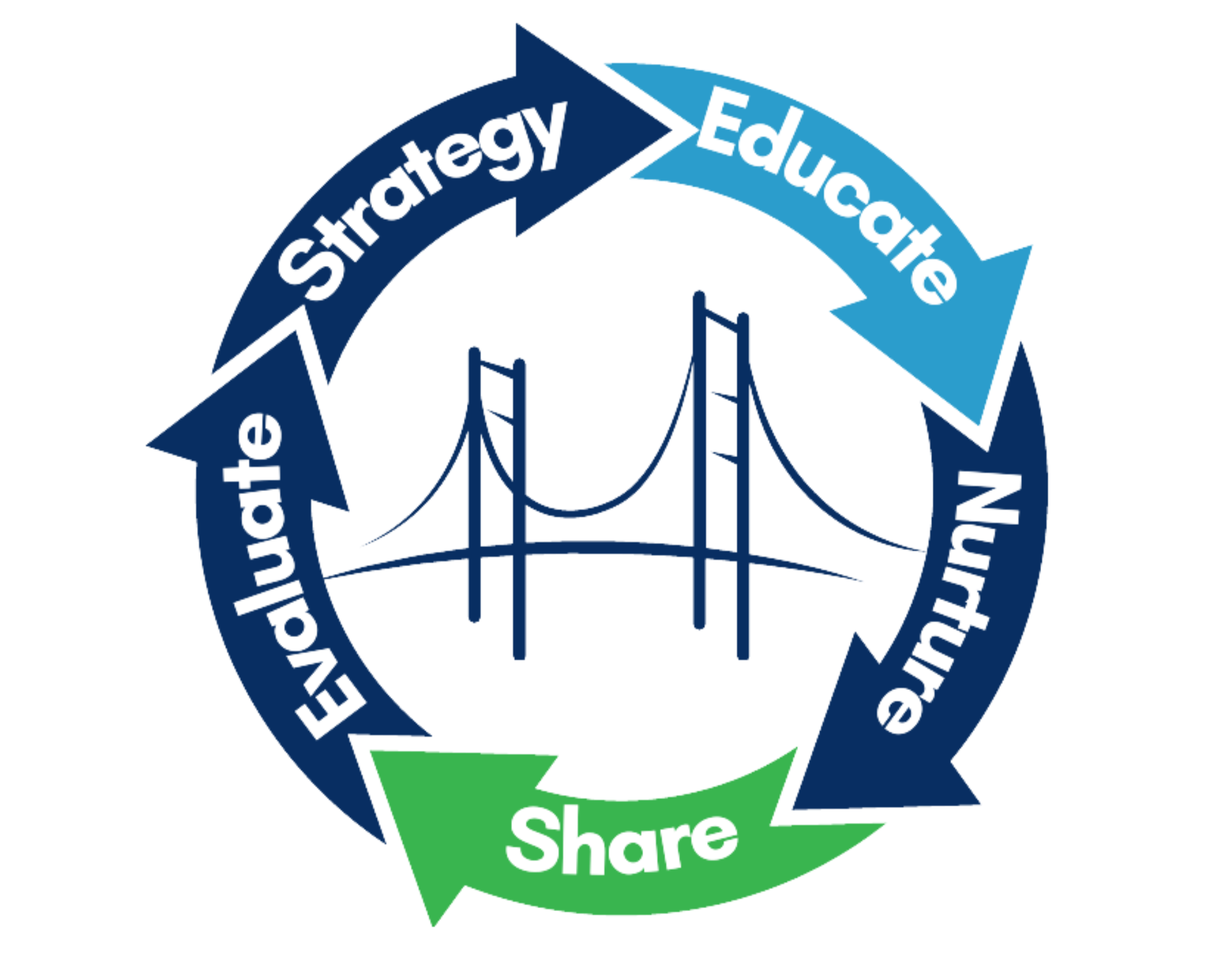
S.E.N.S.E.™ is how those are held together, and each part earns its place at a handover.
Source: The HRologist Ltd © 2026
The plan belongs to leadership rather than to one exhausted person who might leave, the adults across all three settings have a shared approach rather than four, at every one of those boundaries the relationship is the provision. The methodology is built so Information can cross from home to school and vice versa, or school to workplace, without anyone being blamed on the way. This is usually the actual blocker, and it is rarely a data protection problem. It is a trust problem.
Evaluate and measure, so you know whether the handover held, rather than finding out six weeks later when the referral comes back.
The reform is pointing the same way, which is useful rather than coincidental. The entire purpose of a plan that follows a child into their next setting is to stop the handover being the place where understanding is lost.
Where the work comes in
Most of what I have described here, a school can do without me. I would rather you did.
Where I get asked in is when the pattern is bigger than one child, or when the adults need someone from outside the staffroom to hold the conversation, so that nobody has to defend their own twenty minutes in front of colleagues.
I work in three stages, and you can stop after any one of them.
Map. A School Pressure Map. I look at where the pressure actually sits across the setting, not only around one child, and name the patterns the incident log is not catching. The map is yours whether or not you do anything else with me.
Bridge. A 30-Day Calm Bridge Install. One pattern, one bridge, one review, run properly with your own adults, so that it becomes a habit rather than another project.
Measure. A 90-Day Embed and Scale, for trusts that need the change to hold across more than one school and to show up in something you can report to a board.
For staff rather than pupils, I run AmbiSense® Rounds. A structured, facilitated space where the people carrying the load can put it down and be heard, without it becoming a case conference or a wellbeing initiative.
And for parents and carers, and the family-support professionals working alongside them, there is SENSE™ Community. Quite often the adult who most needs the shared read is at home.
All of it runs on one principle, which is the whole of S.E.N.S.E.™ part of AmbiSense - Empowering Growth Through Mindful Reflection Ⓡ in a sentence: no adult around a child should be working from a different picture, and nobody should lose that picture at a handover.
I am not a clinical service and I do not replace one. I am the person who helps the adults around a child see the same shape at the same time.
If the referral comes back and nothing in the room has changed, what exactly were we expecting the referral to do?
One thing you could do this week
You do not need me for this, and I would rather you had it than not.
Take one child whose referral has come back. Get three adults who see them at different points of the day into a room for half an hour. Ask each one to describe what happens in their twenty minutes, in order, without interpreting it. Write down where the three accounts disagree.
That disagreement is your pattern.
If you do that and the pattern turns out to be bigger than you can hold with the time you have, email me at naomi.withers@thehrologist.co.uk with "pressure map" in the subject line and tell me what you found. I will tell you honestly whether it is something your team can run themselves or something worth bringing someone in for. I say the first one more often than you might expect.
Sources
Children's Commissioner for England, Children's and Young People's Mental Health Services 2024-25, published June 2026. Referral volumes, referrals closed before treatment, waiting times, suspected autism figures. The accompanying press notice is the easier link for readers.
Department for Education, Special educational needs in England, academic year 2025/26, published 11 June 2026. January 2026 census: pupils with SEN, EHC plans, primary type of need.
Department for Education, Every child achieving and thriving (Schools White Paper), 23 February 2026. There is also an HTML version.
Department for Education, SEND reform: putting children and young people first, consultation closed 18 May 2026. Individual Support Plans, the tiered model, transitions, implementation timetable.
House of Commons Library, The Schools White Paper 2026: SEND Reform, briefing CBP-10550. The clearest neutral summary of what is proposed and when.
Department for Education, Inclusive mainstream fund for schools: conditions of grant 2026 to 2027, updated 1 July 2026. This is the document that makes the inclusion strategy a condition of grant.
Department for Education, Developing an inclusion strategy using the inclusive mainstream fund, published 25 June 2026. Non-statutory guidance, the seven principles, and the DfE template.
National Audit Office, Support for children and young people with special educational needs (summary), 24 October 2024. Outcomes since 2019, high needs funding, incentives to be inclusive.
Education Endowment Foundation, Improving Behaviour in Schools guidance report. Functional behaviour assessment, the limits of universal systems, knowing and understanding pupils.
nasen and Bath Spa University, The National SENCO Workforce Survey: time to review 2018-2020. SENCO time allocation, being pulled away from the role, intention to stay.
Contact, key statistics about families with disabled children, drawing on Counting the Costs 2024. Parent carers leaving or reducing work, income lost, households with nobody in paid employment.
Department for Education, SEND code of practice: 0 to 25 years. The graduated approach and the assess, plan, do, review cycle; the wording on SENCO time.
Department for Education, Suspensions and permanent exclusions in England. Suspension totals and the SEN gap. Open the full-year 2024/25 release and check the SEN tables yourself before publishing, as noted below.
