

SEND inclusion and EBSA support that reduces repeated escalations
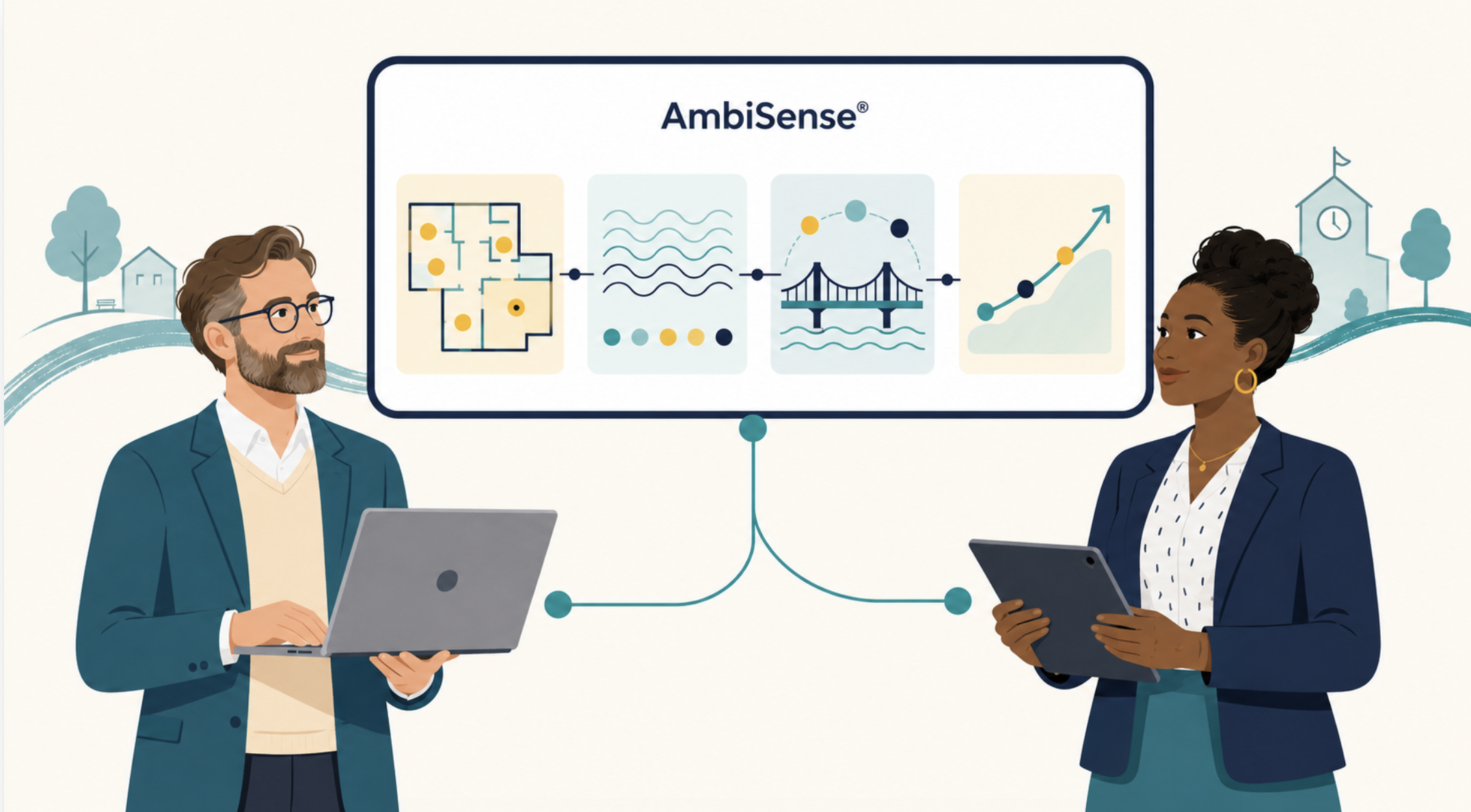
Your staff care. So why does the same pressure keep returning at arrival, transitions, lunch and re-entry? AmbiSense® maps where escalation, absence and staff strain cluster across your school or trust, then installs the scripts, thresholds and routing that keep those moments calm.
The same moments keep going wrong
Arrival
The same pupils struggle at the gate, and the same few adults are pulled in to help.
Transitions
Corridors, lesson changes and lunch are where calm days tip into incidents.
Re-entry
Returning to class after an exit or absence goes differently every time.
Parent contact
Hard conversations with families repeat, and nobody is sure who owns them.
These are system signals, not staff failings. Your policy may be clear, but it is hard to use under pressure.
Map it, install it, embed it
Map the pressure point
We use your existing data, even if it is messy, to name the one “hot window” costing you most.
Install a Calm Bridge™
Staff agree what to notice, say, do, record and route, so the first response is the same whoever is on duty.
Measure and embed
We track time to resolution and incidents, and hand over a routine that doesn't depend on heroics.
School and trust packages
Every package starts with one named pressure point and works alongside your SEND, behaviour and safeguarding processes.
Pressure Map Diagnostic
£1,250
- Your priority pressure point, named with evidence
- A clear recommendation for what to fix first
First install
£3,000
- Scripts, thresholds and routing for one hot window
- Early movement in time to resolution or incidents
Full embed
from £12,000
- AmbiSense® built into how your school or trust runs
- Named owners and measures governors can follow
Want to start with your staff? The 90-minute CPD workshop is £895 on site.
From a school leader
The workshops gave our leadership team a new language for empathy. We've seen a real shift in how staff support one another.
Headteacher · Multi-Academy Trust
Your next step
Start free, then go deeper when you're ready.
Inclusion Pressure Map
A 20-minute leadership tool to find your priority pressure point.
Get the free Pressure MapFree leaders' webinar
Why the same situations keep escalating even when staff know the policy.
See upcoming webinarsBook a call
Talk through your map and whether a diagnostic, 30-day install or 90-day embed fits.
Book a callQuestions from school leaders
Is this therapy?
No. It is an operational install of scripts, thresholds, routing and measures that make safety and recovery repeatable. It is non-clinical.
Will this replace our behaviour, SEND or safeguarding processes?
No. It strengthens what you already do by making the first response and the escalation routes consistent across staff.
How fast will we see change?
In one named hot window, early movement usually shows within 30 days, such as faster time to resolution or fewer incidents.
What do you need from us?
Your existing data (even if it is messy), the right people for 60 to 90 minutes, and named owners so the system doesn't depend on heroics.
Do you work with multi-academy trusts?
Yes. We work with single schools and with trusts across several sites, online across the UK and in person in Nottinghamshire and the East Midlands.

Naomi Withers, founder
I hold a BPS-accredited qualification in psychology and a postgraduate qualification in strategic human resource management (CIPD Level 7), with more than 25 years working with families, schools and organisations. I created AmbiSense® because I kept seeing capable people blamed for problems the system had created.
Not sure which path fits? Let's talk it through.
A short conversation about what is happening and what might help. No hard sell.
One hour a month. One situation. No fixing.
- 60 minutes
- Online
- Once a month
- Not recorded
Most conversations about neurodiversity in school jump straight to strategies. This one doesn’t. It’s a calm hour to slow down and see what’s really happening beneath the behaviour, the escalation or the meeting that went badly.
- One situation. Naomi reads out a composite, invented situation that will feel uncomfortably familiar.
- No fixing. We sit with it. No advice, no action points, no going round the room. You speak only if you want to.
- What was underneath. In the last ten minutes, Naomi names what was really happening, using one part of the SENSE™ framework.
You'll get the joining link by email, and a short written summary afterwards.


FAQs
Is this therapy? No. It’s an operational install: scripts, thresholds, routing and measures that make safety and recovery repeatable.
Will this replace our existing behaviour/SEND/safeguarding processes? No. It strengthens what you already do by making the first response and escalation routes consistent.
How fast will we see change? In one named hot window, you’ll typically see early movement within 30 days (TTR improving and/or incidents reducing).
What do you need from us? Existing data (even messy), the right people for 60–90 minutes, and named owners so the system doesn’t rely on heroics.