

Belonging is becoming evidence: how AmbiSense® helps schools move inclusion from intention to practice
If the same pupils, families, staff or situations keep reaching crisis point, the issue is rarely lack of care.
It is usually a pressure point the school has not yet been able to see clearly enough, early enough, or consistently enough.
The problem often is not that people do not care enough.
It is that the system does not always know what to do when things get messy.
That is where belonging becomes more than a feeling. It becomes something leaders need to notice, support, repair and evidence in practice.
For UK schools and Multi-Academy Trusts, belonging is becoming more than a values conversation. Attendance, SEND support, behaviour, pastoral care, parent-school trust and staff capacity are increasingly linked in the same leadership challenge:
How do we show that inclusion is actually being felt in the moments where school life gets messy — not just written into policy?
A recent Schools Week article reported on government-commissioned research linking pupils’ reported sense of school belonging with attainment at key stage 4. The article is careful — rightly — to make clear that the research shows association, not causation. But the message for schools is still significant: belonging is not a soft add-on. It is connected to the conditions in which pupils attend, engage, recover, participate and achieve.
The article also highlights a deeper inclusion challenge. Girls, white pupils, pupils from disadvantaged backgrounds and pupils with SEND were reported as less likely to say they belong in school.
That matters because belonging is not experienced evenly.
It is shaped by daily routines, adult responses, peer relationships, SEND support, family trust, emotional safety, communication and the way a school responds when pressure rises.
What does school belonging mean?
School belonging means a pupil experiences school as a place where they are known, safe enough, understood enough and supported enough to participate.
It is not simply whether a pupil likes school. It is whether they can access learning, relationships, routines, expectations and support without repeatedly feeling unsafe, unseen, overwhelmed or excluded.
For school leaders, SENCOs, inclusion leads, attendance leads and pastoral teams, belonging becomes practical when it shows up in daily evidence:
pupils attending more consistently;
pupils recovering faster after conflict, dysregulation or anxiety;
staff responding with greater consistency;
reasonable adjustments being understood and used in practice;
families trusting that the school understands the pressure point, not just the visible incident;
repeated behaviour, attendance or SEND-related escalation reducing over time.
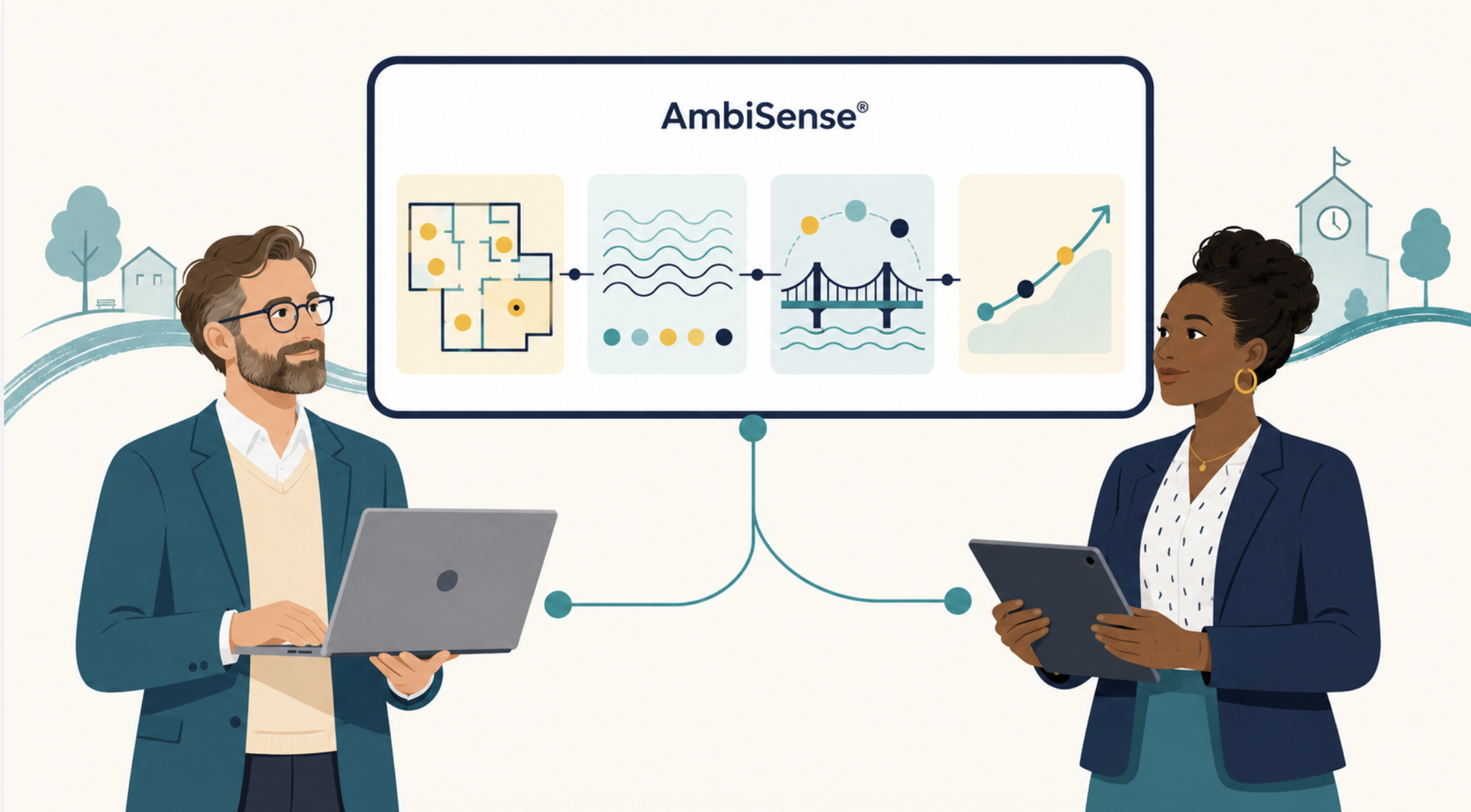
This is where AmbiSense® is useful. It helps schools and organisations identify repeated pressure points and build practical pathways that reduce overwhelm, restore trust and help people function better.
Inclusion cannot sit only in policy
Most schools already care about inclusion. Many have strong values, detailed policies, pastoral teams, behaviour systems, safeguarding procedures, SEND processes, attendance strategies and wellbeing initiatives.
Inclusion is not proven by what a school says it values.
It is evidenced by what repeatedly happens when a pupil is anxious, dysregulated, excluded socially, struggling to attend, overwhelmed by transition, experiencing SEND-related barriers, caught in behaviour cycles, or when parent-school trust has started to break down.
That is where the pressure often appears first.
Not in the strategy document.
Not in the policy folder.
In the same repeated moments:
the morning arrival that keeps breaking down;
the lesson transition that repeatedly escalates;
the pupil who appears fine until the pressure is too high;
the parent conversation that becomes defensive before trust can be rebuilt;
the SEND adjustment that exists on paper but is not consistently felt in daily practice;
the behaviour pattern that keeps being managed without being properly understood.
Schools are not short of care.
They are often short of capacity, clarity and evidenceable pathways that hold when the day gets difficult.
Why belonging matters for attendance, SEND and behaviour
When belonging breaks down, it rarely does so in one isolated moment.
It tends to show up as a pattern.
A pupil is repeatedly late, withdrawn, angry, avoidant, tearful, oppositional, absent, dysregulated or in conflict. A parent-school relationship becomes strained in the same places. Staff find themselves firefighting the same issue with limited time, inconsistent information and increasing pressure.
The visible issue may be attendance, persistent absence, emotionally based school avoidance, behaviour, SEND pressure, pastoral demand, parent communication, leadership firefighting or staff overwhelm.
Underneath, the question is often the same:
Where does this keep breaking down and what is the repeated pressure point telling us?
That question matters because schools cannot evidence inclusion meaningfully if they are only recording incidents after pressure has already escalated.
They need to be able to show what they noticed, what changed, and whether that change helped.
Belonging depends on psychological safety
Belonging is not simply whether a pupil likes school.
It is whether they experience school as a place where they are known, safe enough, understood enough and supported enough to participate.
Psychological safety in schools does not mean removing expectations, avoiding accountability or lowering standards. It means creating the conditions where pupils and staff can function well enough to meet those expectations.
For pupils, this can mean:
feeling able to ask for help without shame;
knowing what will happen when they struggle;
trusting adults to respond consistently;
having routes back after conflict or dysregulation;
experiencing adjustments without feeling singled out;
feeling that their needs are understood before they escalate.
For staff, psychological safety matters too.
Staff need clear routines, shared language, practical ownership and confidence that they are not carrying complex inclusion pressures alone.
Without this, schools become reactive. Attendance conversations become stuck. Behaviour logs show incidents but not always the pattern underneath. SEND pressure becomes a series of individual crises. Parent communication becomes defensive. Staff capacity gets consumed by repeated escalation.
The transformation schools need
The shift is not about choosing between high expectations and human need.
Good schools already care about both.
The shift is from treating every incident as separate to noticing where things keep breaking down.
From:
What happened?
To:
Where does this keep happening, what is it costing us, and what needs to change in practice?
This is the space AmbiSense® is designed to support.
AmbiSense® helps schools and organisations identify repeated pressure points and build practical pathways that reduce overwhelm, restore trust and help people function better.
In a school context, that means helping leaders and teams move beyond reacting to individual incidents and towards seeing the repeated places where belonging, safety, communication, environment, expectation or support begin to break down.
It is not about adding another heavy programme.
It is about making the real pressure visible enough to act on.
How can schools evidence inclusion in practice?
Schools can evidence inclusion by showing a clear line between what was noticed, what was changed, and whether that change helped.
This matters for school improvement, SEND provision, attendance strategy, behaviour review, pastoral leadership, safeguarding-adjacent concerns and parent-school communication.
Evidenceable inclusion might include:
fewer repeated escalations in the same pressure points;
faster recovery after dysregulation or conflict;
clearer adult responses;
improved parent-school communication;
more consistent reasonable adjustments;
better attendance conversations rooted in context;
stronger pupil voice around what helps;
greater staff confidence and consistency;
clearer review loops showing what changed.
This creates a stronger inclusion story that leaders, governors, trusts and teams can actually stand behind:
We noticed the pattern.
We understood the pressure point.
We changed practice.
We reviewed whether it helped.
We adapted based on evidence.
That is inclusion in action.
What AmbiSense® helps schools see
AmbiSense® uses a structured human-fit lens to help schools understand what sits beneath repeated pressure, without reducing pupils to behaviour, attendance figures or isolated incidents.
It helps schools ask better questions before patterns become more entrenched:
Where is pressure repeatedly rising?
Which pupils, families, staff or settings are most affected?
What is the visible issue telling us about the conditions around it?
Where is communication breaking down?
What is being carried by individual staff that needs clearer ownership?
What would make the next response more consistent, practical and reviewable?
This matters because belonging is built in repeated moments, not one-off statements.
A hard morning may not only be poor punctuality. It may be a predictable transition pressure point.
A shutdown after lunch may not only be refusal. It may be overload.
A parent conflict may not only be difficult engagement. It may be a trust rupture after repeated unmet need.
A behaviour incident may not begin with the behaviour. It may begin earlier, in the conditions that made escalation more likely.
AmbiSense® helps schools see those patterns clearly enough to respond differently.
From pressure to practical action
Schools do not need more abstract language about inclusion.
They need practical routes from concern to action to review.
AmbiSense® helps turn repeated pressure into human-fit pathways: clear, usable responses that fit the pupil, the staff team, the family context and the school’s real capacity.
That work can support schools to:
notice repeated pressure earlier;
reduce unnecessary escalation;
strengthen adult consistency;
improve parent-school communication;
support more practical inclusion;
protect staff capacity;
make action and impact easier to evidence.
The value is not in creating more paperwork.
The value is in creating a visible line between what was noticed, what changed, and whether it helped.
What are human-fit pathways?
Human-fit pathways are practical routes that fit people not people squeezed into pathways.
A human-fit pathway does not ask people to become less human so the system can cope. It asks what the system needs to understand, practise and hold differently.
In schools, that means designing responses around the pupil’s context, the family’s reality, the staff team’s capacity and the pressure points that keep repeating.
A human-fit pathway might include:
a clearer morning arrival routine;
a transition support plan that staff can actually use;
a short script for predictable parent-school conversations;
an agreed response when a pupil becomes dysregulated;
a review loop that tracks whether the change helped;
a shared ownership route so complex pressure is not carried by one person.
This is not about lowering expectations. It is about creating the conditions where pupils and adults have a better chance of meeting them.
Why this matters now for schools and MATs
The Schools Week article is useful because it brings belonging into a wider conversation about attainment, disadvantage, SEND, bullying and policy direction.
Schools do not need another abstract debate about whether belonging matters.
They need practical ways to make belonging visible, repeatable and reviewable.
They need approaches that protect staff capacity rather than adding another heavy programme.
They need systems that recognise pupils as humans with context, pressure, relationships, sensory needs, trust histories, responsibilities, strengths and limits.
They need pathways that fit people, not people squeezed into pathways.
For MAT leaders, headteachers, SENCOs, inclusion leads, pastoral leads and attendance teams, the commercial and operational question is clear:
Where is repeated pressure costing pupils, families, staff and leaders the most and what would change if that pressure became visible earlier?
The AmbiSense® position
AmbiSense® sits below and around existing school systems. It does not replace safeguarding, SEND assessment, behaviour policy, attendance procedures, clinical judgement or statutory duties.
It strengthens the space where many school pressures actually emerge: the repeated daily moments where pupils, families and staff either feel safe enough to engage — or begin to disconnect.
AmbiSense® helps schools and MATs identify repeated pressure points behind attendance, behaviour, SEND pressure, parent conflict and staff overwhelm — then turn those patterns into practical, human-fit pathways that reduce escalation, restore trust and make inclusion easier to evidence without adding another heavy programme.
Belonging is not a poster, a survey score or a policy phrase.
It is a pattern of lived experience.
And if schools are going to evidence inclusion meaningfully, they need to be able to show how that experience is noticed, supported, repaired and improved in practice.
A conversation worth having
If this article made you think of one pupil, one family, one team member, one transition or one repeated moment, start there.
That is usually where the system is already trying to show you something.
If your school or MAT is seeing repeated pressure around attendance, behaviour, SEND, parent communication or staff capacity, despite strong values, committed staff and existing systems — AmbiSense® can help you make sense of that pressure point, build around it and review whether life becomes a little more workable for the humans inside the system.
The 30-Day Human-Fit Schools Sprint gives leaders a focused route to map where pressure is rising, identify what is being carried by staff, and build clearer pathways that can be reviewed.
If you are already using the AmbiSense® school kit, start with the Inclusion Pressure Map. It gives teams a simple way to name where pressure is repeatedly showing up before deciding what needs to change.
The first step is a focused conversation about where pressure is repeatedly rising, what it is costing your team, and what would need to change for inclusion to become more visible, consistent and evidenceable.
