

Schools do not need another wellbeing poster. They need a bridge for the moment that keeps breaking down.
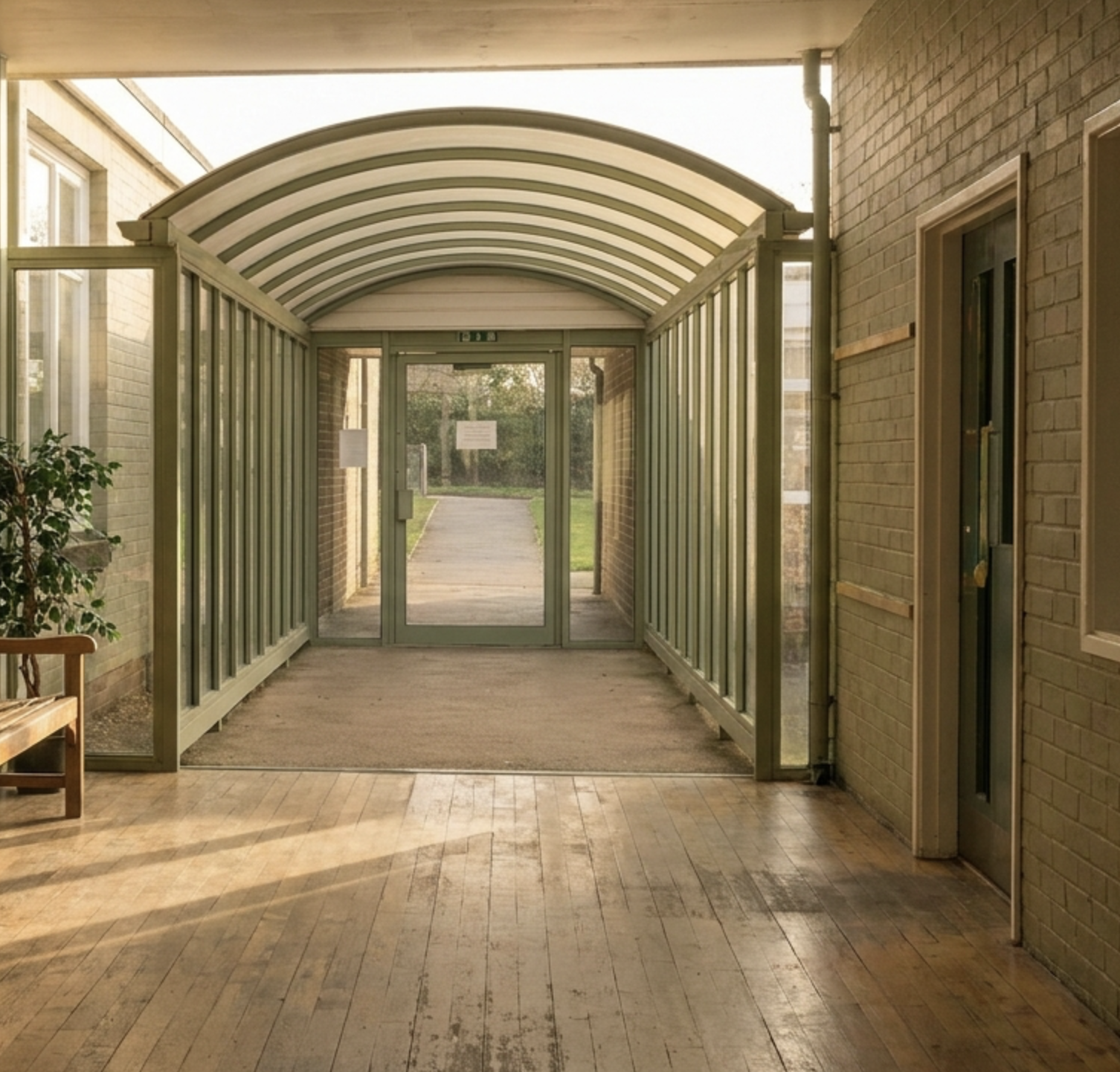
Schools have more wellbeing resources than ever.
PSHE schemes.
Mental health toolkits.
Regulation language.
Nurture approaches.
Trauma-informed training.
Pastoral systems.
Behaviour policies.
Attendance procedures.
Still, in many schools, the same moments keep breaking down.
The same child escalates at the same transition.
The same parent conversation becomes tense.
The same attendance concern turns into conflict.
The same member of staff absorbs the emotional load.
The same leadership team loses time to the same preventable pattern.
That does not mean people do not care.
It may mean the school has support, but not yet an installed bridge at the pressure point.
The problem is often not lack of care
Schools are not short of concern.
Most school leaders, SENDCos, pastoral teams, attendance leads and classroom staff are carrying a huge amount of emotional responsibility. They are trying to support children, hold parent relationships, meet statutory expectations, reduce absence, manage behaviour, protect staff capacity and keep the day moving.
The issue is not usually that nobody knows wellbeing matters.
The issue is that wellbeing language often sits too far away from the moment where pressure actually spikes.
A policy might say the right thing.
A training session might explain the right principle.
A resource might offer a helpful strategy.
When the hot window opens the corridor, the call, the transition, the correction, the reintegration, the Friday handover people still need to know:
What do we notice first?
Who owns the next step?
What do we say?
What do we not say?
What routine holds this moment?
What evidence tells us whether it is shifting?
That is where emotional safety has to become infrastructure.
Repeated pressure points are data
A repeated escalation is not just an incident.
It is data.
If the same problem keeps happening in the same place, at the same time, with the same emotional pattern, the school is being shown something useful.
It may be showing:
a transition carrying too much load
a communication route that escalates rather than steadies
a SEND support gap
an attendance process that starts too late
a staff confidence gap
a child masking until they cannot hold it any longer
a parent-school trust rupture
a safeguarding handover that depends too much on memory
a behaviour system responding after the peak rather than before it
In AmbiSense®, I call these hot windows.
A hot window is a repeated pressure point where people begin to expect things to go wrong.
Not because they are negative.
Because the pattern has taught their nervous systems what to prepare for.
Hot windows need Calm Bridges™
A hot window does not need more blame.
It needs a bridge.
A Calm Bridge™ is a small, repeatable routine that helps people move through a high-demand moment with more safety, clarity and consistency.
It might include:
a phrase adults use before escalation peaks
a decision rule for who responds
a transition routine
a parent communication script
a repair process after rupture
a handover prompt
a simple measure to track whether the pattern is shifting
The power is not in making the routine complicated.
The power is in making it usable when people are tired.
Because under pressure, people do not rise to the level of a policy. They fall back on whatever routine is easiest, clearest and most rehearsed.
If the routine is blame, escalation repeats.
If the routine is avoidance, pressure grows.
If the routine is one exceptional staff member carrying everything, the system stays fragile.
A Calm Bridge™ gives the moment a safer default.
This is not another wellbeing add-on
This is where AmbiSense® sits differently.
A wellbeing curriculum can teach universal skills.
Trauma-informed training can build awareness and shared principles.
Regulation tools can help people name and manage states.
Counselling or therapy can support individual mental health.
Pastoral support can hold children who need relational intervention.
All of that can matter.
AmbiSense® asks a different operational question:
Where does the system keep failing under pressure, and what bridge needs installing there?
That makes the work practical.
It is not about adding another initiative.
It is about finding the repeated pressure point and designing the response before everyone is exhausted.
September makes this visible
September is a useful audit.
It reveals where the system is already thin.
Attendance routines are tested.
Parent communication is tested.
Transition support is tested.
SEND provision is tested.
Staff capacity is tested.
Behaviour systems are tested.
Leadership bandwidth is tested.
The question is not:
How do we make everyone cope better?
The better question is:
What pressure point needs a bridge before it becomes the pattern?
That is the question schools and MATs can start asking now.
A simple starting point
Choose one repeated pressure point.
Not ten.
One.
Then ask:
Where does this usually happen?
Who is involved?
What tends to happen just before escalation?
What do adults currently say or do?
Who owns the next step?
What would make this moment 10% safer or clearer?
How will we know if the pattern is shifting?
That is the beginning of emotional infrastructure.
Not a poster.
Not a slogan.
Not another wellbeing add-on.
A bridge.
Conclusion
Schools do not need to be told that wellbeing matters.
They need practical emotional infrastructure around the moments where pressure keeps becoming escalation.
That means identifying the hot windows, building Calm Bridges™, and tracking whether the pattern changes.
Because predictable breakdowns at predictable times are not random.
They are signals.
And signals can be designed around.
Find out more about AmbiSense®️ for Schools & MATs
Free de-escalation scripts are here
If September pressure is already on your mind, I’ve created a simple September Pressure Map for schools and MATs.
It helps you spot where emotional load is most likely to show up before it becomes escalation, attendance, parent contact, SEND, behaviour, safeguarding load, staff capacity and transition points.
Message SEPTEMBER and I’ll send it over.
