

Your School's Inclusion Strategy Has a Deadline. What Happens When It Meets Real Life?

An empty school corridor stretches toward a window at the far end, natural light casting long shadows across the floor. The image is monochrome and still, conveying quiet anticipation.
December 2026 is close enough now to appear in school development plans, trust board papers and local area timetables. The inclusion strategy that follows from the SEND and alternative provision improvement plan expects mainstream schools to be the ordinary route for far more children with special educational needs and disabilities, with funding and accountability to match [1]. What that looks like in a document is a plan. What it looks like in a corridor at 9:40 on a Tuesday morning is something else entirely.
When the same situation keeps coming back
There is a particular kind of pressure in schools that never announces itself. It is not the emergency. It is the pattern that returns: the same child, the same flashpoint, the same member of staff stepping in, the same review where everyone agrees the plan is broadly working.
Nothing is failing. That is the difficulty. A school can absorb a great deal by asking a small number of people to give a little more each week, and the paperwork will keep looking healthy while they do. Which raises a question that is uncomfortable to sit with, and more uncomfortable to answer honestly. Is the support working—or are committed people making it look as though it is?
That question is not an accusation. It is about conditions rather than character. If the honest answer is that three people are holding a system together, the school has a resilience problem, and it will not show up in a provision map. It will show up in a resignation letter, a period of sickness, or a child who stops coming in.
Is the support working or are committed people making it look that way?
Schools are good at recording what they do. Provision maps, review cycles, individual plans, contact logs, the graduated approach of assess, plan, do, review that the SEND Code of Practice sets out [2]. All of it matters. None of it, on its own, tells you whether the support changed anything for the child.
Text on a black background reads: Is the support working — or are committed people making it look as though it is?
The review stage is where honesty lives, and it is the stage that gets squeezed first when the week is full. A review that happens but changes nothing is a record of activity. A review that changes something is evidence of impact. The gap between the two is usually time, and time is what a stretched team does not have.
So when governors are told that support is in place, or a trust board sees a steady picture across its schools, the sensible follow-up is not suspicion but a question about load. A picture resting on the goodwill and stamina of a handful of staff is a real picture. It is also a fragile one.
SEND reform in mainstream schools: what does inclusion feel like on a difficult day?
Inclusion is easy to describe on a good day. The room is settled, the adjustments are in place, the adult who knows the child is in the building. A difficult day looks different. Two staff are absent. The quiet space is double-booked. A supply teacher is covering a class they have never met. A child who has managed well for a fortnight is not managing today.
On that day, inclusion is not a policy. It is an adult standing in a corridor deciding whether to stay with the child in front of them or go to the meeting about the child they were meant to be supporting. Neither choice is wrong. Both cost something.
This is what the SEND reform conversation in mainstream schools has to hold. The strategy can set expectations about ordinary provision, and it should. But daily reality is decided by capacity: how many adults, how much time, how much flexibility, and whether the system has any slack left when something goes wrong. A plan that assumes the good day is the normal day will not survive a term.

Multiple pairs of women's hands with a range of skin tones are gathered around a table covered with documents and papers. No faces are visible. Natural light falls across the scene, conveying shared responsibility and collective decision-making.
The incident ends. Does the pressure?
After an incident there is a sequence, and most of it is invisible from outside the room. The child is settled. The class is reassured. A call goes home. A form is completed. Someone finds five minutes to write down what happened, and someone else reads it and decides whether anything needs to change.
Then the day continues. Pressure does not end with the incident, because it is cumulative rather than episodic. It sits in the staff member who replays the conversation on the drive home. It sits in the SENCO with four more reviews before Friday. It sits in the teaching assistant who has been asked, again, to cover a gap that is not theirs.
This is why the usual indicators can look steady while something beneath them thins. Attendance, exclusions and review completion rates are lagging measures. The leading measures are quieter: how long experienced staff stay, how often people absorb a gap, how many plans depend on one person's memory. A school can meet its duties and still be wearing people down.
Home, school and work are connected by people
The adults in a child's life rarely sit in separate compartments. The parent at the review may also be a teaching assistant at another school. The governor asking the sharpest question about inclusion may run a small business that has employed young people who left school without the support they needed. The commissioner allocating a finite budget is also the person who reads the letters from families when provision is not there.
That overlap matters for how the deadline is met. Inclusion is not a project a school completes on its own, and it is not something a local area can commission into existence without the schools that have to deliver it. The people who will make the strategy real already carry a full week. Whether the plan gives them room to work, or adds a layer of expectation on top of what they already do, is what decides whether it lands.
What AmbiSense® brings to the conversation
AmbiSense® exists to make pressure visible before it becomes something a school has to explain. The School Pressure Map is a structured way of looking at how demand moves through a school or a trust: where it concentrates, which systems absorb it, which are one absence away from failing, and where informal workarounds have quietly become the real provision.
It is a diagnostic, not an inspection. Nothing in it is designed to catch anyone out. The point is to give leaders, SENCOs and governors the same picture, so that the conversation about inclusion stops being a set of impressions and becomes a shared reading of the same situation.
That shared picture makes the next decision easier. Whether it is a staffing change, a timetable adjustment, a different use of the inclusion budget or a case to the trust for support, it can be argued from evidence rather than anxiety. The map does not tell a school what to do. It shows them where they are standing.
Who benefits and how? The inclusive mainstream fund and the question behind it
Funding is part of this, and the inclusive mainstream fund conversation is a real one. Money arriving at a school, though, does not automatically change what happens at 9:40 on a Tuesday morning. What it changes depends on whether the school knows where the pressure sits and what would genuinely relieve it.
Different people get different things from that clarity. A headteacher gets a defensible account of where the strain is, which is useful in front of a trust board. A SENCO gets knowledge they already hold written in a form others can act on. Governors get something concrete to govern with, rather than a summary they have to take on trust.
For a trust or a commissioner, the value is comparison. When the same pattern appears in three schools, it is rarely three separate problems. It is one systemic issue that has been landing on three sets of staff. That distinction changes what you do next, and who pays for it.
What should governors, MAT leaders and commissioners be asking?
The questions that matter are not complicated, but they are difficult to answer from a distance. Governors can ask where demand actually concentrates in the week, which parts of provision depend on a single person, and what happens in the fortnight after a new pupil arrives mid-year. The test underneath all of it is simpler: how do we know whether support is working, rather than whether it was recorded? What would we see if it were not working?
If nobody can describe the early warning signs, the system is relying on someone noticing late. Governors and trustees do not need to be experts in SEND to ask this. They need to be willing to ask it in the same tone they would use for safeguarding or finance.
Commissioners have a related question: which schools are absorbing demand beyond what their funding reflects, and what would change if that were addressed? These are the questions the December 2026 deadline will eventually force. Asking them early, in your own words and on your own timetable, is a better position than answering them under scrutiny.
What would meaningful progress actually look like? The inclusion strategy December 2026 test
Progress rarely looks like a new document. It looks like a review cycle that happens on time and changes something as a result. It looks like fewer children on reduced timetables, not because the policy changed but because the support held. It looks like teaching assistants who stay another year, and a SENCO who is not the only person who knows how the plan works.
It also looks like leaders being able to say, without hedging, where the pressure is and what they are doing about it. That clarity is not a luxury. It is what makes honest prioritisation possible when there is not enough of everything to go round.
The test of the inclusion strategy will not be whether schools can describe it. It will be whether, in an ordinary week in February, the support is still standing when someone is off sick and the timetable has already been rewritten twice. That is the standard worth planning against.

A modern, inclusively designed school interior showing distinct zones for different needs, a calm corner with soft low seating, an open collaborative area with flexible furniture, and a sensory alcove with natural textures. Large windows bring in natural daylight. The space is empty of people but clearly designed to welcome a range of learners. Warm neutral tones, contemporary architecture.
Start with the situation you already recognise
If any of this describes your school or trust, the sensible first step is not another plan. It is a clear look at what is actually happening. The AmbiSense® School Pressure Map is built for that: a structured, evidence-based picture of where pressure sits, developed with the people who know the school best.
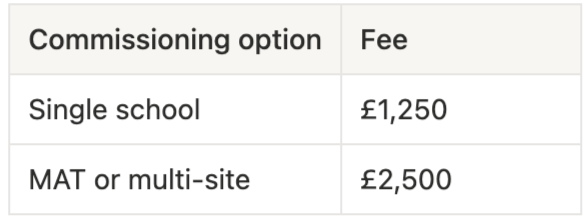
It works as a standalone piece of work for one school, and as a comparative exercise across a trust or a group of schools working with the same commissioner. The findings are yours to act on, in whatever order makes sense for your context.
We begin with a scoping conversation. No obligation, no pitch — just a look at the situation you already recognise and an honest answer about whether the map would help.
Fit people. Don't squeeze them.
The strategy has a deadline. The people living it need something that works on a difficult day.
Join us at our upcoming free webinar on 3 November 2026 at 4pm - Your staff know the policy. So why does the same situation keep escalating?
A note on scope: AmbiSense® work is diagnostic and developmental. It supports leadership thinking and does not constitute legal advice. Statutory duties relating to special educational needs and disability, including those set out in the Children and Families Act 2014 and the SEND Code of Practice: 0 to 25 years remain with the school, trust or local area [2][3].
Sources
[1] Department for Education, SEND and alternative provision improvement plan — https://www.gov.uk/government/publications/send-and-ap-improvement-plan
[2] Department for Education and Department of Health and Social Care, SEND code of practice: 0 to 25 years— https://www.gov.uk/government/publications/send-code-of-practice-0-to-25
[3] Children and Families Act 2014 — https://www.legislation.gov.uk/ukpga/2014/6/contents
