

Finding Your Calm: From Reaction to Connection
Do you ever feel like you're constantly reacting to a child's big feelings instead of calmly responding?

That feeling of helplessness when a small issue turns into a major meltdown is a common struggle. It's the "Reaction vs. Response" Dilemma, and it's something every parent and educator faces.
This is often paired with the feeling of being ill-equipped. We've all had that thought: "I wish I had a script for that!" You see a child struggling, but you just don't know what to say. You want to help them navigate their emotions, but you feel like you're fumbling in the dark. This lack of practical strategies can lead to the "Am I Doing This Right?" voice - that constant internal monologue of self-doubt. You long for the confidence to trust your instincts and feel like you're truly making a difference.
Parenting and teaching can also feel incredibly isolating, leading to the feeling of being "Alone in the Chaos." We need a community of people who "get it" - a place to share our struggles and triumphs without judgment. We're looking for support that feels genuine, not preachy.
Beyond the daily struggles, there's the "Why Are They Doing That?" Puzzle. You see concerning behaviours - anger, withdrawal, or difficulty at school, and you know there's something bigger going on. You want to understand the root cause and equip your child with the skills to handle these challenges. This is where the principles of emotional regulation become essential.
Finally, the emotional load of parenting and teaching can be exhausting, leading to the "Burnout Blues." You're trying to manage your stress while supporting a child, and it can leave you feeling drained and burned out. You're looking for a way to create more calm and connection for everyone in the family or classroom.
By adapting the iSense approach, we can address these very real problems. It's about empowering parents and educators to move from reacting to responding, building confidence, and creating a supportive community where everyone can thrive. When you feel supported and have the right tools, you can create more calm, more connection, and more confidence—because when you thrive, your kids thrive.

The Psychological Framework: Why AmbiSense Works for Parents and Educators
The problems above are all symptoms of a breakdown in the crucial processes of co-regulation and emotional attunement. Our approach directly addresses these core psychological needs with principles that are highly relevant for both parents and educators.
1. From Co-Regulation to Self-Regulation: The Core of Emotional Discipline
When a child is having a meltdown, their prefrontal cortex, the part of the brain responsible for logical thought, is essentially offline. They're operating from their emotional, reactive brain. This is the root of the "Reaction vs. Response" Dilemma.
For Parents: You are your child's first and most important teacher of emotional regulation. By modelling a calm response, you're not just dealing with the immediate issue; you're teaching your child how to regulate their nervous system. This process, known as co-regulation, is a profound developmental lesson. With consistent co-regulation, a child's ability to self-regulate develops over time, a skill essential for success in all areas of life. The Sense approach gives you the tools to become a consistent source of calm, helping your child build a strong foundation for emotional resilience.
For Educators: In the classroom, you are a co-regulator for many children at once. A child who struggles with self-regulation can disrupt the entire learning environment. By moving from reacting to responding, you can de-escalate a situation, help the child return to a calm state, and get back to learning. This approach creates a safer, more predictable classroom where children feel secure enough to engage with academic and social challenges.
2. Building a 'Script' for Emotional Attunement: Bridging the Communication Gap
The feeling of "I wish I had a script for that" and the "Am I Doing This Right?" self-doubt come from a fear of misinterpreting a child's needs. This is where emotional attunement comes in. Attunement is the process of being aware of and responsive to a child's internal state. It's about seeing past the behaviour to the underlying emotion (e.g., fear, frustration, or sadness).
For Parents: The AmbiSense approach provides practical strategies for your "script"—that help you correctly identify your child's emotions and respond in a way that makes them feel seen and understood. This not only resolves the immediate problem but also strengthens the parent-child attachment bond, creating a secure base from which your child can explore and learn. When a child feels truly understood, they're more likely to trust you and come to you with future challenges.
For Educators: A classroom is a complex social environment. Educators who are attuned to their students' emotional states can proactively address problems before they escalate. By understanding that a child’s inattention or defiance might be rooted in anxiety, you can tailor your approach to be more supportive and effective. Attunement helps you build strong relationships with students, fostering an environment of trust and mutual respect.
3. The "Why Are They Doing That?" Puzzle: Understanding the Window of Tolerance
Children's behaviour is a form of communication. When you see concerning behaviours, such as anger or withdrawal, it's often a sign that the child is operating outside of their "Window of Tolerance" - the optimal zone of arousal where they can effectively manage emotions and function well.
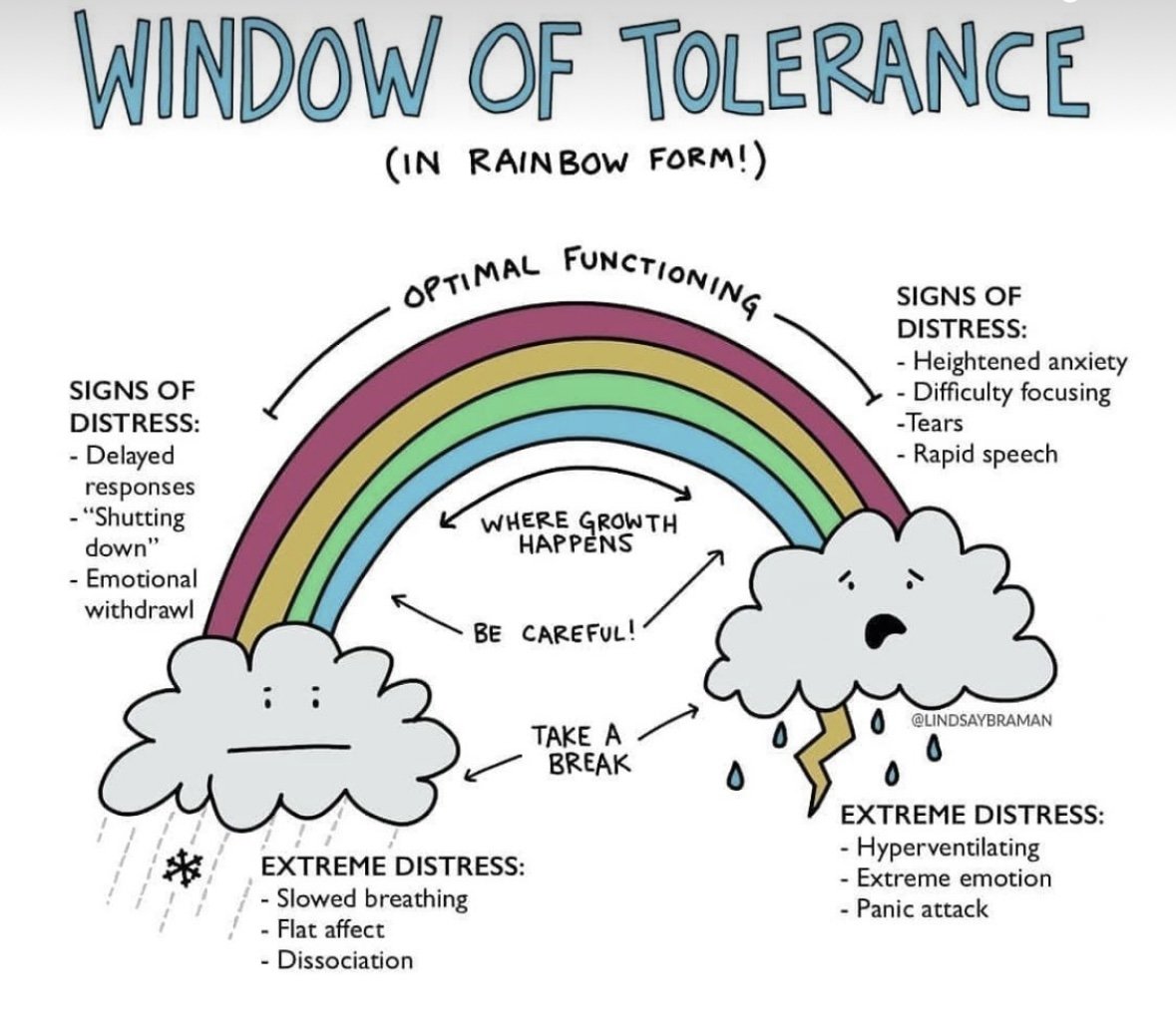
For Parents: The AmbiSense approach provides a framework to understand what pushes a child out of this window and how to help them return to it. By understanding the root cause, be it sensory overload, fear, or frustration, you can stop treating the symptom and start addressing the core issue. This is how you equip your child with the skills to stay regulated and resilient in the face of life's challenges.
For Educators: An educator's ability to recognise when a student is outside their window of tolerance is a crucial skill. A child who is hyper-aroused (anxious, fidgety) or hypo-aroused (withdrawn, disengaged) cannot learn effectively. The AmbiSense principles help you identify these states and use simple, non-disruptive strategies to help the child re-regulate, allowing them to participate in the learning process more fully.
4. Community and Burnout: The Power of Social Support
The feelings of isolation and "Burnout Blues" are a natural consequence of the intense emotional labour of parenting and teaching. This is why a supportive community is so crucial.
For Parents: A strong community acts as a powerful buffer against stress. Sharing struggles with others who "get it" validates your experience, reduces feelings of shame, and provides practical advice. It transforms a solitary struggle into a shared journey, which is vital for building resilience and preventing burnout.
For Educators: The demands on educators are immense, and the lack of support can lead to significant stress. A professional learning community that uses the AmbiSense approach can provide a space for educators to share challenges, collaborate on solutions, and feel supported by their peers. This collective support system can lead to greater job satisfaction, reduced burnout, and ultimately, a more positive and effective learning environment for students.
By directly addressing these fundamental psychological principles, the Sense approach moves beyond simple tips and tricks. It provides a comprehensive framework for understanding and nurturing a child's emotional world, leading to more confident parents, more connected families, and more resilient children and classrooms.
Find out more at www.thehrologist.co.uk or email us at hello@thehrologist.co.uk
